ANATOLIA INTERNATIONAL FILM FESTIVAL


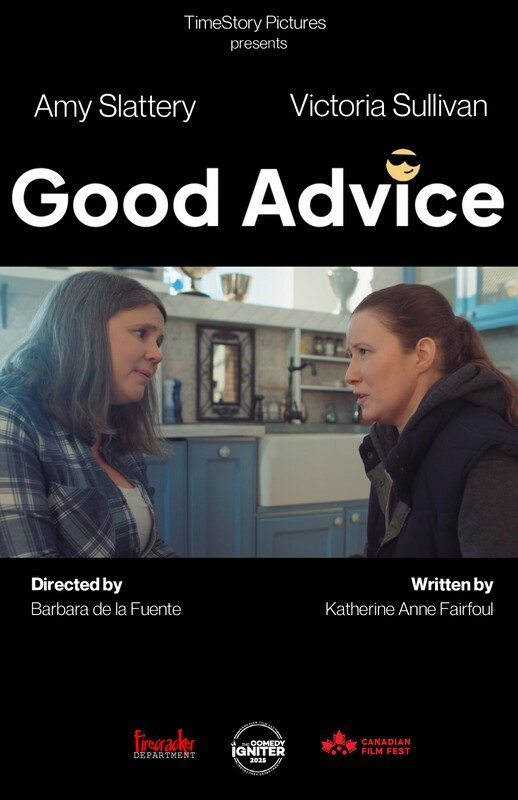
Good Advice
by Barbara de la Fuente
Review
“To describe my mother would be to write about a hurricane in its perfect power.”
— Maya Angelou
Directed by Canadian filmmaker Barbara de la Fuente, Good Advice is a short yet strikingly witty comedy that intertwines humor, female solidarity, and the unvarnished realities of motherhood into a clever, tightly woven narrative. Despite its brevity, the film manages to deliver both laughter and reflection, capturing the modern-day contradictions faced by women balancing maternal devotion and personal exhaustion. At its heart lies Amanda, a young mother whose life revolves entirely around her newborn son, Jack. Still in his breastfeeding stage, Jack demands constant attention, leaving Amanda caught in a relentless cycle of fatigue and anxiety. To stay close to him while earning a living, she takes a job at a food delivery company—an arrangement that allows her to carry Jack along on her rounds.
From its opening moments, the film plunges us into Amanda’s chaotic world. In the first scene, she delivers food to a woman named Georgie. When she realizes she’s forgotten an item, Amanda breaks down in tears, confessing how overwhelmed and inadequate she feels. The tension between humor and heartbreak is palpable. Seeing Amanda’s distress, Georgie tries to help—her brother is a psychologist, and she fancies herself something of an amateur counselor. Yet a comic misunderstanding sets the film’s central irony in motion: Georgie mistakes Jack for Amanda’s abusive partner after misinterpreting her complaints about being “suffocated,” “controlled,” and “exhausted.” Believing she’s speaking with a victim of domestic violence, Georgie solemnly advises Amanda to “leave Jack.”
What follows is a hilarious collision of empathy and absurdity. Amanda’s stunned reaction—defending her “tormentor” with tender devotion—turns what could have been tragedy into biting satire. She explains that although Jack drains her to the bone, he’s also her entire world. When he clings to her, she forgets everything else. This duality—between love and exhaustion, joy and despair—lies at the emotional core of Good Advice.
The comedy peaks in one of the film’s most delightfully awkward scenes. After finishing the delivery, Amanda absentmindedly leaves Jack in his stroller by the door and walks away, too distracted by the lack of a tip to notice. Georgie, hearing a baby’s cry, rushes out to find Jack alone and panics, convinced her suspicions were right. The sequence borders on slapstick but remains grounded in a truth every sleep-deprived parent knows too well. De la Fuente masterfully balances realism with irony, keeping the audience both amused and uneasy.
Performance-wise, the film rests entirely on the chemistry between its two leads—Amy Slattery and Victoria Sullivan—who deliver superbly nuanced portrayals. Sullivan, as Amanda, is particularly compelling: her weary eyes and tremulous humor carry the emotional weight of the story. Technically, the film is flawless—its lighting, color palette, sound design, and costume choices all harmonize effortlessly. Every frame feels deliberate, clean, and confident.
In barely four minutes, Good Advice accomplishes what many full-length features struggle to achieve: it evokes empathy, provokes laughter, and exposes the hidden fatigue behind society’s romanticized notions of motherhood. De la Fuente’s short is both a small triumph of comic timing and a tender, ironic ode to every woman trying to hold it all together.
AIFF