ANATOLIA INTERNATIONAL FILM FESTIVAL
The Mountains Remember
by Christophe Caporilli
Review
“The cruelest lies are often told in silence.” Robert Louis Stevenson
Christophe Caporilli, as a public historian, takes the 1692 Glencoe Massacre as the subject of his documentary The Mountains Remember. Long debated within historical scholarship, the massacre gained renewed symbolic power in the 19th century, when the rise of Romanticism and nationalism transformed it into more than just a tragic episode—it became a touchstone for literature, art, and even politics. Glencoe stands at a paradoxical crossroads: on the one hand, an embodiment of raw injustice and lawlessness; on the other, one of history’s most chilling examples of state terror attempting—and failing—to engineer loyalty through fear.
Caporilli’s film opens with sweeping vistas of the Highlands, the rugged region of northern and northwestern Scotland where the massacre unfolded. The imagery captures not only the harshness of the climate and geography but also the intoxicating sense of freedom that the wild beauty inspires. The narration, written in a poetic register, situates the Highlands as a cultural sanctuary, where clan traditions and loyalty long resisted southern political and cultural pressures. Yet this pastoral autonomy would fracture with the emergence of the modern state—and the Glencoe Massacre marks one of its decisive ruptures.
The documentary briskly recounts the deposition of the Catholic James II, replaced by his Protestant daughter Mary II and her Dutch husband William III. This transfer of power is visualized through striking AI-generated animations that bring the political upheaval to life. Though the Catholic Jacobite uprisings that followed did not directly involve the Protestant MacDonalds of Glencoe, William needed an unmistakable demonstration of Highland loyalty. The MacDonalds became the cautionary tale: their chief, Alasdair Maclain, attempted to swear his oath of allegiance but was delayed by bureaucratic obstacles. His tardiness, recorded six days past the deadline, became the pretext for an atrocity carefully staged as a warning to all clans.
The treachery is almost theatrical in its cruelty. According to Highland custom, soldiers were welcomed as guests into local homes. For two weeks, 120 troops under Captain Robert Campbell lived with the MacDonalds, eating at their tables, sharing drink and conversation. When the order arrived, these same “guests” turned executioners. Most obeyed, transforming hospitality into slaughter. Caporilli renders this betrayal with both dramatic intensity and poetic restraint, allowing the horror to unfold with chilling clarity.
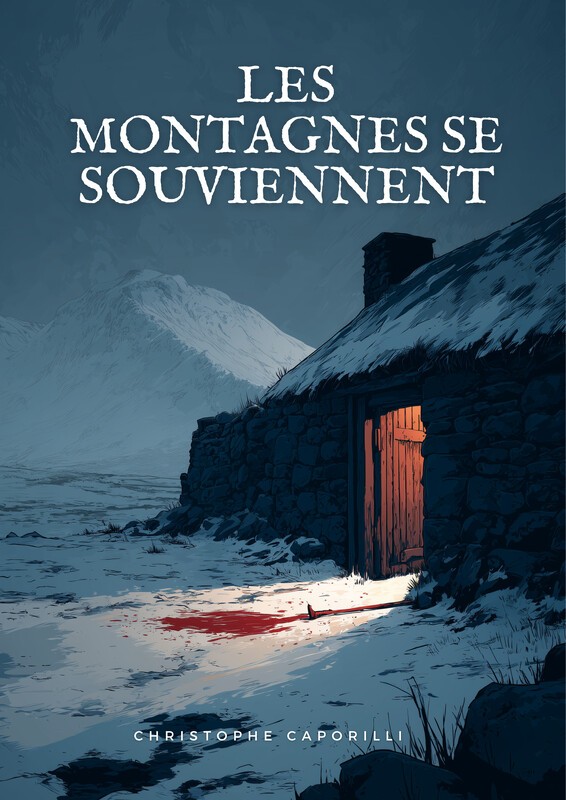
Visually, the documentary makes a daring stylistic shift. After opening, Caporilli abandons traditional documentary tropes—interviews, talking heads, or historical reenactments—in favor of a graphic novel aesthetic. Each scene resembles a panel from an illustrated narrative: mist curling over mountains, soldiers’ vacant stares, the lurid glow of fire rendered in brushstroke-like textures. The facial expressions are hauntingly evocative, while subtle visual choices—such as snow continuing to fall against otherwise static images—produce moments of hypnotic stillness that elevate the tragedy into a near-mythic dimension.
Although Caporilli provides no details about the soundtrack, one senses how crucial music is in shaping the emotional register of the film. The score underscores the poetry of the narration and heightens the impact of the visuals, carrying the viewer deeper into the tragic rhythm of the story.
Ultimately, The Mountains Remember is far more than a historical documentary. Through its lyrical narration, striking aesthetic choices, and ethical urgency, it transforms a centuries-old atrocity into a cinematic meditation on betrayal, memory, and the ways history continues to echo across time.
AIFF